
Maritime Strategy Deepens
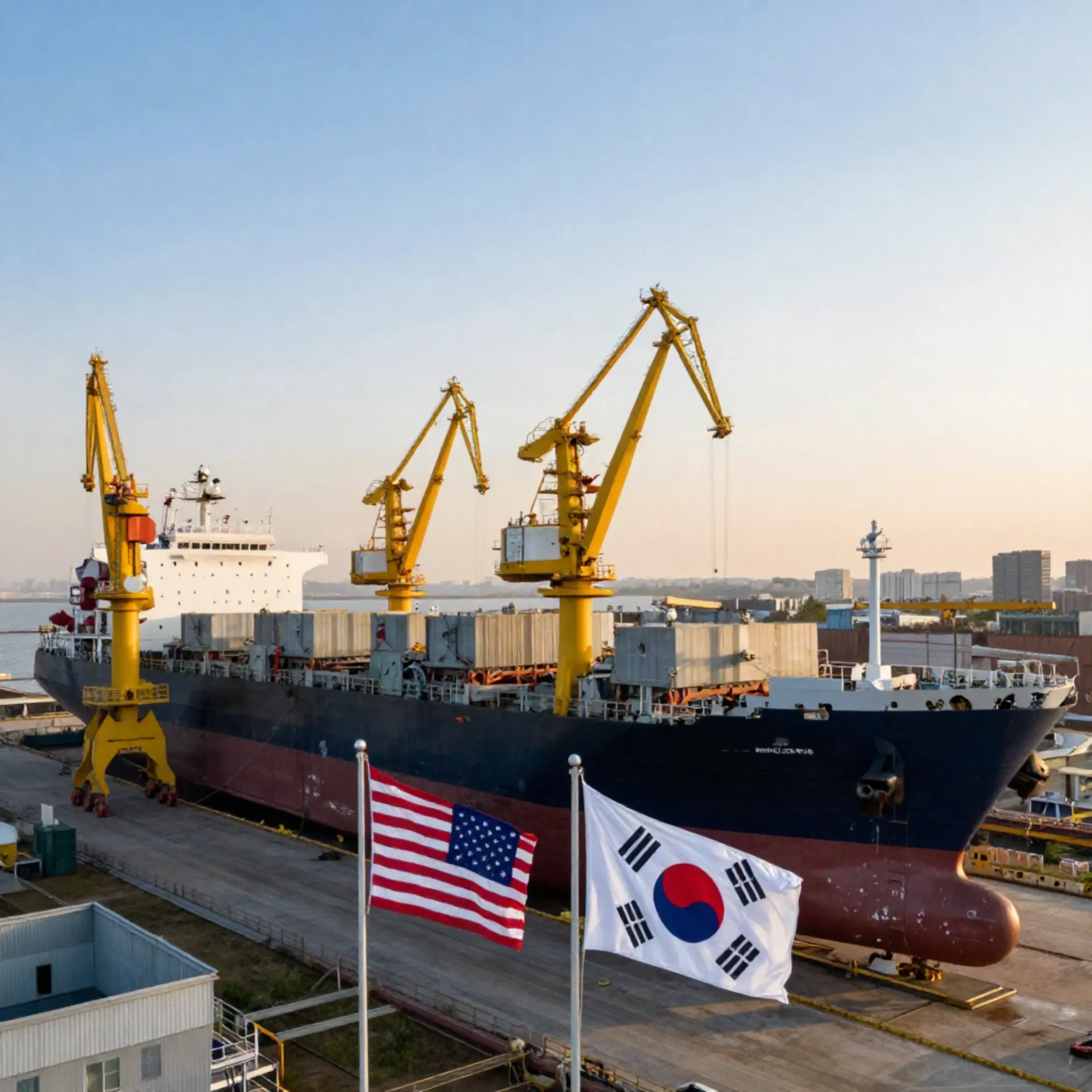
South Korea's chief presidential spokesperson Kang Yu-jung said Lee pledged full cooperation during the meeting and introduced several Korean companies known for their advanced shipbuilding capabilities. The two governments agreed to continue detailed working-level discussions to identify specific ways to collaborate, though officials have not yet disclosed timelines or particular projects. The renewed engagement comes as both sides look to build momentum in the relationship following Lee's election last year, and it highlights growing American interest in tapping South Korea's globally competitive shipbuilding sector to expand naval capacity. Companies such as HD Hyundai Heavy Industries and Hanwha Ocean have increasingly positioned themselves as natural partners for this effort, given their scale and technical expertise in both commercial and naval vessel construction.
Supply Chains Reposition
The shipbuilding discussion sits within a much larger economic picture. South Korea has committed to investing roughly US$350 billion in the United States as part of a trade agreement reached last year, with an annual cap of US$20 billion, and about US$150 billion of that pledge is earmarked specifically for reviving American shipbuilding capacity. For global shipbuilders, steel producers, marine equipment suppliers, and defense contractors, this kind of allied investment signals fresh opportunities in procurement and industrial partnership. It also reflects a wider trend in which governments are choosing to diversify manufacturing across trusted partner nations rather than lean on any single country for critical industrial output. Businesses operating in maritime logistics, advanced manufacturing, and defense technology are likely to see rising demand as this kind of strategic industrial policy gains traction across allied economies.
Industry Becomes Strategy
What began as a request between two leaders is steadily turning into a broader industrial strategy. South Korea remains one of Washington's most important security partners in the region, hosting close to 28,500 American troops, and the shipbuilding conversation adds an economic dimension to that long-standing defense relationship. Beyond the formal talks, the personal rapport between Trump and Lee was on display as well, with the two leaders revisiting a promise from the G7 summit to play a round of golf together and agreeing to schedule Lee's upcoming visit to the United States around that outing. Small gestures aside, the larger signal for businesses is clear. Shipbuilding is no longer just a manufacturing sector; it is becoming a strategic capability tied to national resilience, and companies across the value chain should watch closely as Washington and Seoul work out the details in the months ahead. From manufacturing alliances to geopolitical strategy, InsightSphere connects today's headlines with tomorrow's business opportunities.