
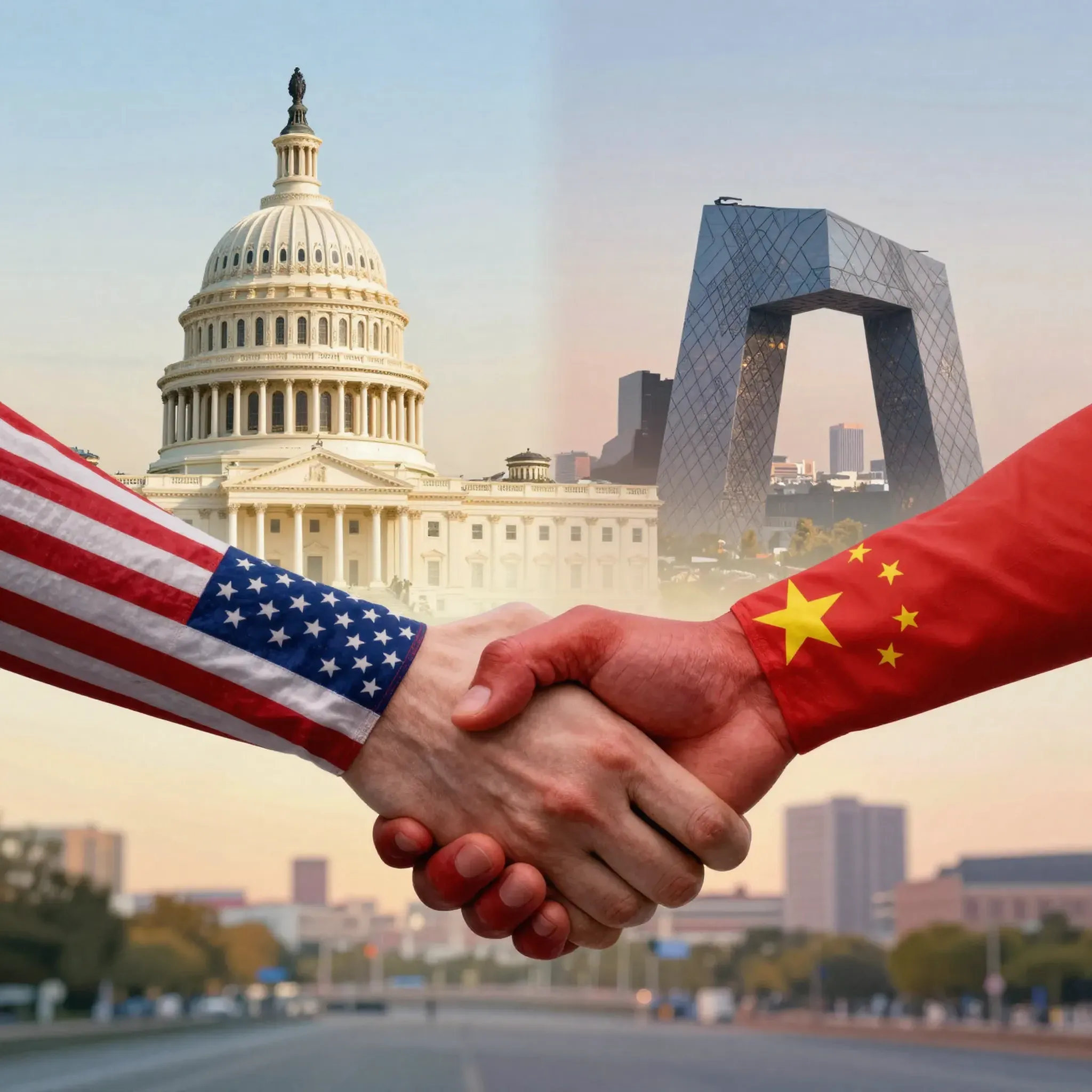
Markets noticed. Business leaders noticed. And anyone tracking the slow unraveling of global trade over the past few years had reason to pay attention. Trump described Xi as "a great leader" and pointed to their personal relationship as the reason tensions had never fully boiled over. Chinese children waving both nations' flags greeted the delegation outside. The imagery was deliberate, the message clear. Both sides wanted this summit to look like a beginning, not just a meeting.
Rivalry Meets Cooperation
The delegation Trump brought to Beijing said everything about what this trip was really about. Elon Musk, Jensen Huang, Tim Cook, and a row of senior American executives walked in alongside Cabinet officials, including Marco Rubio and Pete Hegseth. This was not purely a political visit. It was a commercial one too. Behind closed doors, the conversations reportedly covered tariffs, semiconductor restrictions, Taiwan, and the tangled web of supply chain dependencies that neither country can easily walk away from. Xi, for his part, welcomed the renewed dialogue but did not budge on sovereignty. China's position on Taiwan remains exactly where it has always been. What both sides do seem to agree on is that letting things keep deteriorating is not a winning strategy for either of them. Decoupling sounds clean in a policy speech. In practice, it is expensive, disruptive, and increasingly unpopular with the business communities on both sides. After the closed sessions wrapped up, Musk told reporters the meetings produced "many good things." Huang called both leaders "incredible." Coming from people who run companies with enormous exposure to cross-border trade, those words carry real weight.
Markets Watch Carefully
Investors are not celebrating yet, but they are watching closely. A sustained softening between Washington and Beijing could take pressure off semiconductor stocks, stabilize logistics networks, and give multinational corporations some breathing room on supply chain planning. The optics of Apple and Nvidia sitting at the table matter beyond symbolism. These companies need clarity on chip restrictions and tariff exposure. Any credible progress on either front moves numbers quickly. That said, nobody serious is calling this a reset. Taiwan remains unresolved. The AI race is intensifying. Advanced chip access is still a flashpoint. The optimism priced into markets right now is cautious at best, and one wrong move in the Taiwan Strait could erase it overnight.
Competition Still Defines
Here is the honest read on what happened in Beijing. Two countries that have been locked in an increasingly costly standoff decided to turn the temperature down, at least for now. Not because the rivalry is over, but because both sides are feeling the weight of it. The contest over technology leadership, manufacturing dominance, and geopolitical influence has not paused. It has simply moved into a phase where both nations are trying to compete without the relationship fully breaking apart. Call it managed competition. Call it strategic coexistence. Either way, it is fragile. The real test comes after the handshakes. Trade frameworks, AI governance, and chip access agreements are where intentions meet reality. That work is harder, slower, and far less photogenic than a summit in Beijing. But it is the only thing that will determine whether "better than ever" becomes policy or just another headline. At InsightSphere, we decode the geopolitical and market shifts shaping the future of global business leadership.