
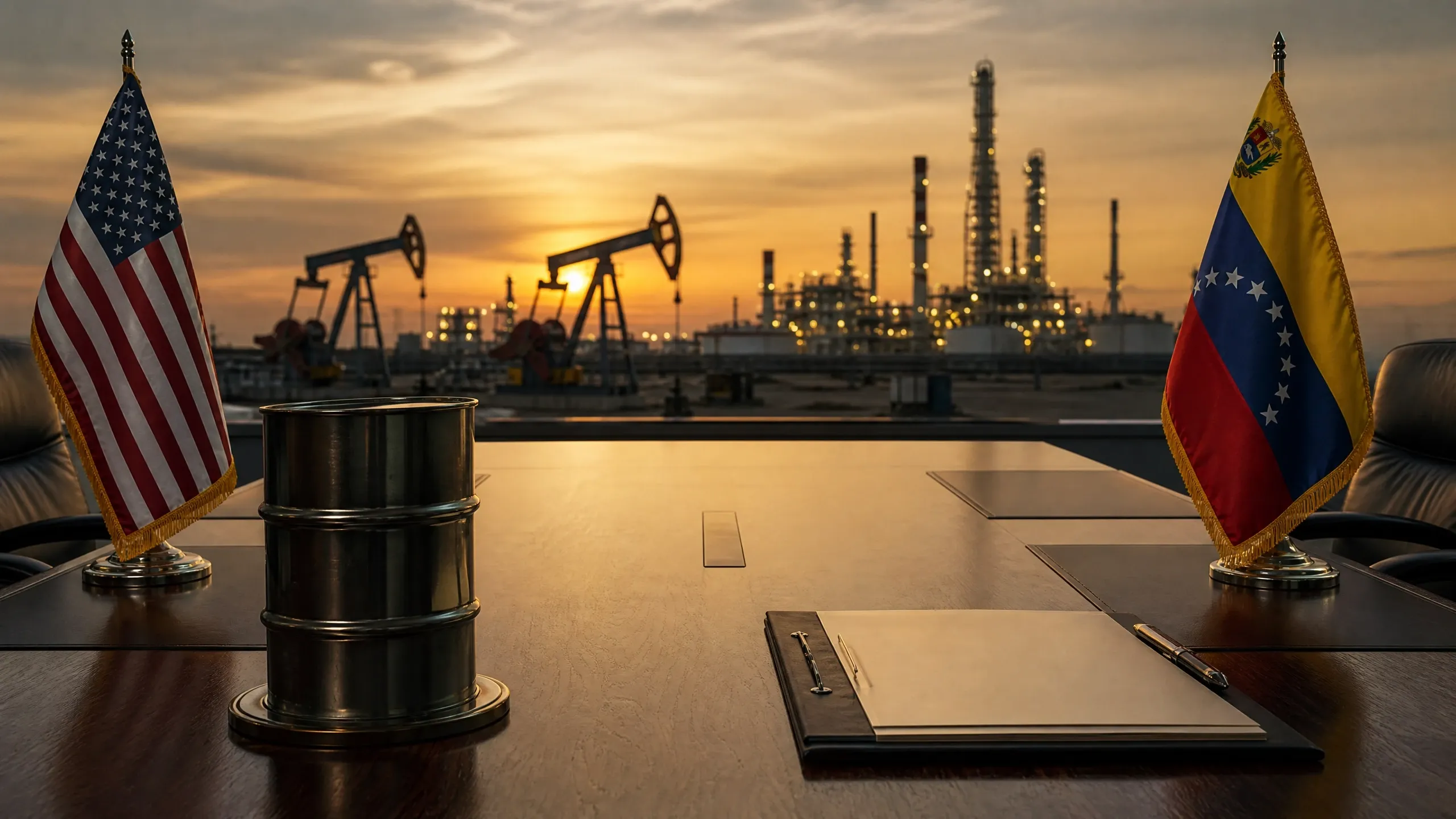
US Secures Oil Leverage
The White House has laid out fresh details of its landmark oil arrangement with Venezuela, giving Washington sweeping control over the country's crude sector. President Trump called it maybe the greatest deal ever made, and the numbers behind it explain why he is so pleased. The agreement arrives seven months after the capture of former Venezuelan leader Nicolas Maduro, and it hands the US first rights to buy a large share of future oil output while placing American officials directly inside the boardroom of the company running the operation.
Washington Gains Strategic Control
At the core of the deal is North American Blue Energy Partners, a privately held firm that has secured 100-year concessions across 17 oil fields in Venezuela. Under the terms released Monday, the US will get first option to purchase roughly 80% of NABEP's crude production, priced at the cost of production. On top of that, the State Department has secured a guaranteed 20% offtake from current and future fields, essentially locking in a steady stream of cheap oil for years to come. The US also holds veto power over any board appointment, and the majority of NABEP's directors must be American citizens. Backing this financially is the Pentagon's Office of Strategic Capital, which will hold a 35% equity stake in NABEP's parent company, a position the White House says could be worth hundreds of billions of dollars over time.
Oil Supply Gets Repositioned
NABEP has set an ambitious goal of pushing output from Lake Maracaibo and the Orinoco Belt past 1 million barrels a day, up from the country's current production of about 1.1 million barrels overall. If that target is met, it would mark a serious jump in Venezuela's oil economy and give the US a fresh, controlled source of supply as it works to refill its strategic reserves. Trump himself said the plan is to bring that oil straight to American refineries. Still, the scale of the ambition runs into a harder reality on the ground. Years of corruption, aging pipelines, and chronic underinvestment have left Venezuela's oil infrastructure in poor shape, and turning paper reserves into steady daily barrels will not happen overnight.
Energy Policy Becomes Geopolitical
Beyond the barrels, this deal is really about positioning. It fits into what officials are calling the Donroe Doctrine, a broader push to expand US influence across the Western Hemisphere. Whether this arrangement survives future administrations or shifts in Venezuelan politics remains an open question, and some opposition figures worry it may strengthen the current interim government rather than encouraging reform. A second round of political talks is expected to begin in September, and how that plays out could shape whether this deal becomes a lasting energy partnership or another example of good intentions meeting difficult execution.
For deeper intelligence on global energy shifts and their market consequences, follow InsightSphere.