
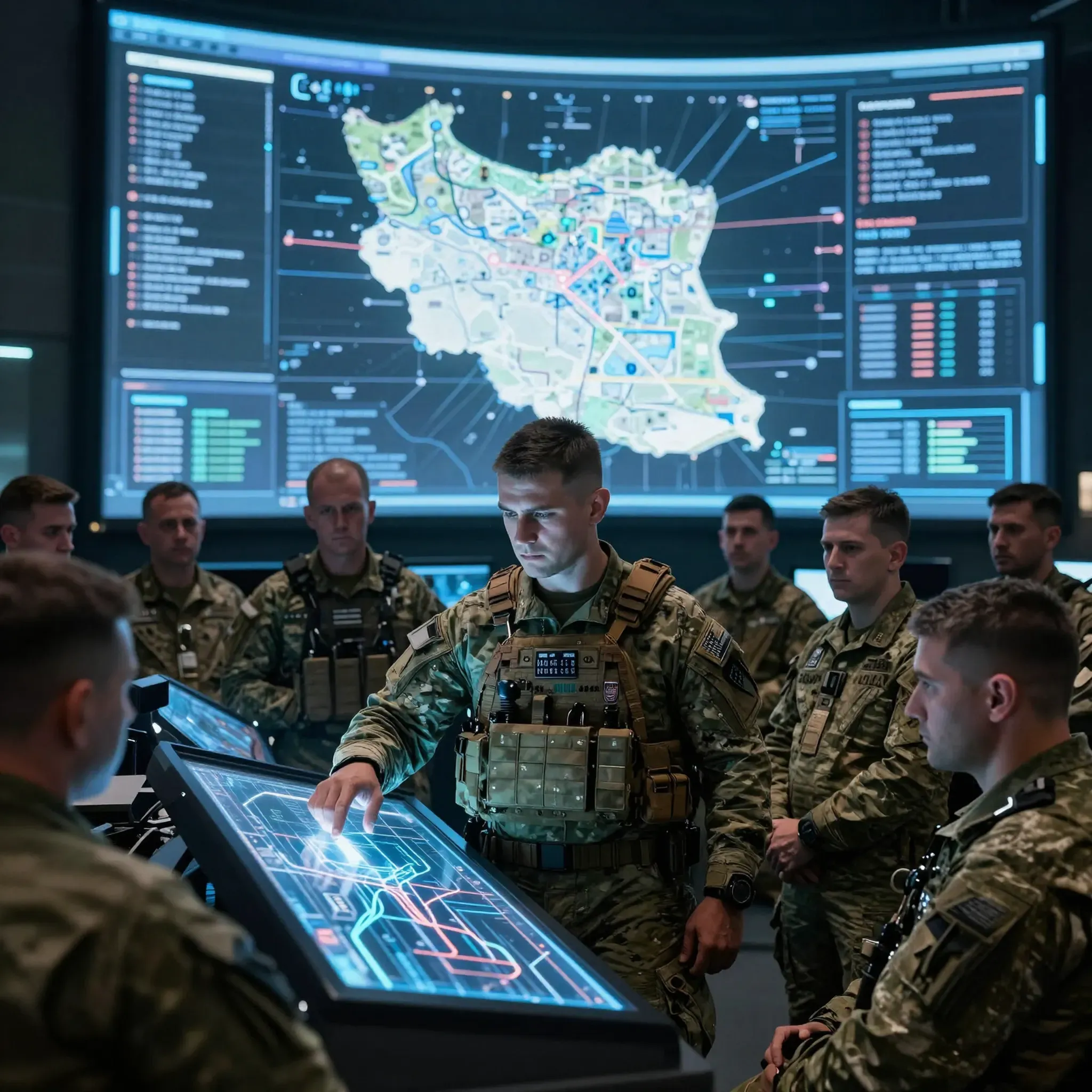
Recent US strikes against the Iranian missiles were carried out at an unprecedented rate. American forces have struck more than 2000 targets since the beginning of the campaign, including nearly 1000 targets in 24 hours of operations. This intensity and precision by military commanders required the utmost advanced technologies which is almost double the scale of 2003 “Shock and Awe” campaign in Iraq carried out by the U.S (Bloomberg). Behind this operational tempo lies a growing network of AI-tools to help navigate war zones with processing enormous volumes of surveillance, satellites signalling, and intelligence in real time.
AI Reduces the Kill Chain Reaction
One of the primary roles of artificial intelligence in Iran is a sequence from target identification to attack and execution called the Kill Chain. Advanced AI systems embedded in the Pentagon’s intelligence have the capacity of scanning surveillance feeds, satellite images, and encrypted communications to identify potential targets and plan out strategies of attack. These tools can process data in minutes rather than hours, allowing rapid decisions during high-intensity operations. Some of these capabilities are linked to systems with the Pentagon’s long AI programs including Project Maven platforms which uses machine learning to analyze drones and satellite imagery. In recent years, AI systems have helped generate targets in real-time, allowing the military to coordinate strikes across air, sea and cyber attacks simultaneously.
AI’s Expanding Role
The growing reliance on artificial intelligence in US defense operations reflects a transformation across global military systems. The global military AI market is reaching approximately $19.2 billion by 2025 with the help of government fundings as per industry estimates. Over 65% of the modern drone operations are already using some form of AI, while AI-powered logistics systems are improving efficiency by 25% (ZipDo). Recently the US Department of Defense has carried out various initiatives to improve AI employment into the defense forces. These programs work to integrate AI across analysis, communications and logistics.